
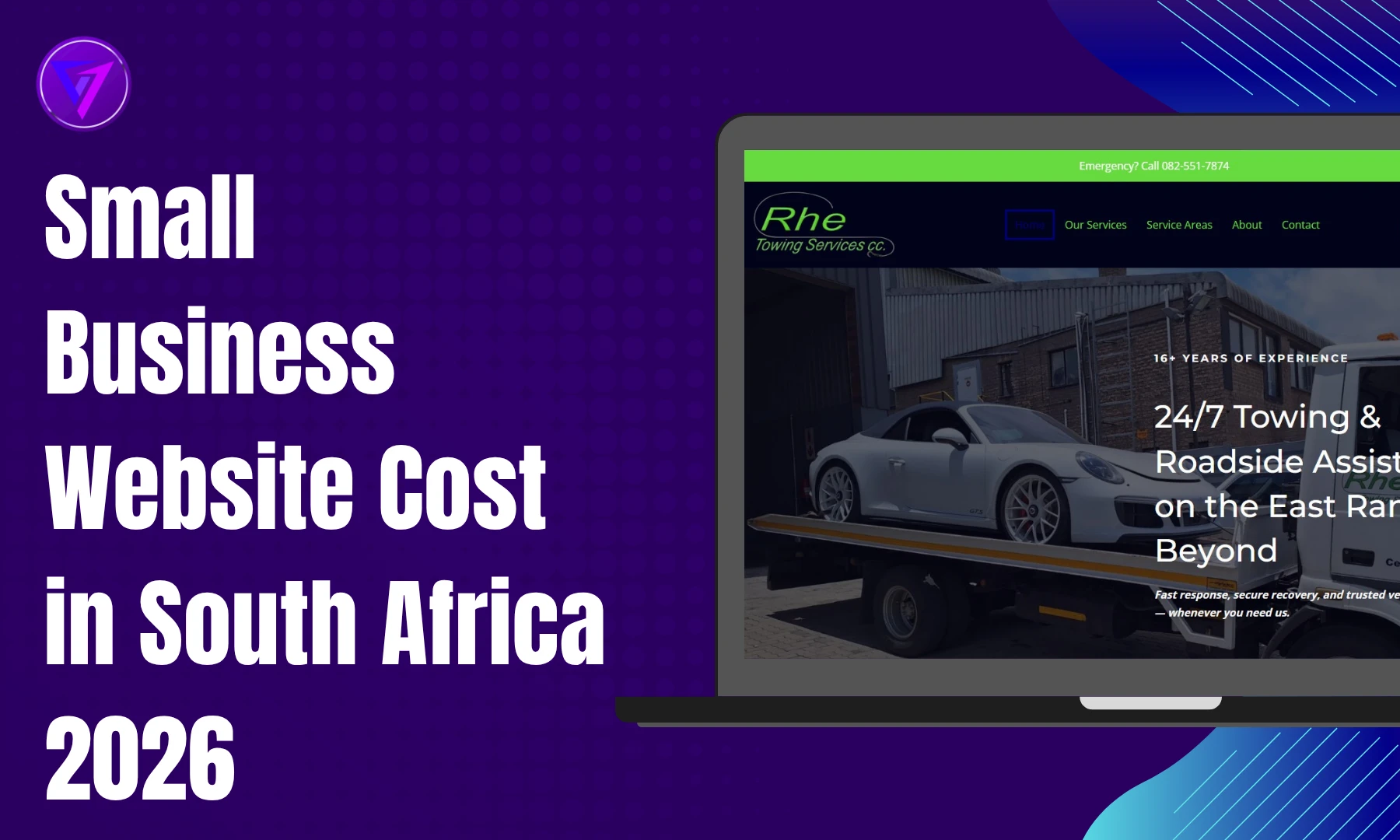
How Much Does a Small Business Website Cost in South Africa in 2026?
Website pricing in South Africa varies enormously. You can find someone offering a five-page site for R500 and an agency quoting R50,000 for the same thing. Neither number tells you much without context.
The honest answer is that what a website costs depends on what it needs to do, how much of the groundwork you have already done, and who is building it. This guide breaks down the realistic price ranges for each type of business website so you can set a sensible budget before you start asking for quotes.
No vague ranges. No upselling. Just a clear picture of what you are likely to pay and what you get at each level.
What Affects the Cost of a Website?
Before getting into numbers, it helps to understand what actually drives the price up or down.
Scope and number of pages.
More pages mean more design time, more content to structure, and more to test before launch. A one-page site and a fifteen-page site are genuinely different projects.
Functionality.
A basic information site costs less than one with an online store, booking system or membership area. Each feature adds complexity and time.
Content readiness.
If you arrive with written copy, photography and a clear brief, the project moves faster and costs less. If the designer has to wait on content or make decisions on your behalf, that takes more time.
Design complexity.
A clean, straightforward layout built on a solid theme costs less than a highly customised design with unique layouts on every page.
Your involvement.
Clients who respond quickly, provide clear feedback and make decisions efficiently tend to have smoother projects. Scope changes, late feedback and unclear briefs add time and cost.
Here is a breakdown of the main website types and what each one typically covers at its starting point.
A single scrolling page covering your core business information. Good for sole traders, service providers who are just getting started, event pages, or businesses that need an online presence quickly without a large budget.
At this level you typically get a clean, mobile-friendly single page with sections for your introduction, services or offering, contact details and a contact form or WhatsApp link. It is a functional starting point, not a long-term solution for a growing business.
The most common entry point for established small businesses. Four pages usually covers a homepage, an about page, a services page and a contact page. That is enough structure to explain who you are, what you do and how to get in touch.
This is a solid, professional presence for businesses that do not need anything complex but want something that looks credible and works properly on both desktop and mobile.
A step up in scope. Suited to businesses with multiple services, a more detailed story to tell, or content that benefits from being organised across separate pages. You might have individual service pages, a gallery, a team page or a resources section.
More pages give Google more to index, which helps your search visibility over time. This is a good option for businesses that are serious about growing their online presence.
For businesses with more complex needs. This could include a full service directory, detailed about content, multiple landing pages, a blog section, case studies or a resource hub.
At this level the site starts functioning as a proper marketing and lead generation tool rather than just an online brochure. The build takes longer and requires more planning upfront, which is reflected in the starting price.
An online store with a payment gateway, product pages, a cart and checkout. Built on WooCommerce, which integrates with South African payment options like PayFast, Peach Payments and Yoco.
The starter tier suits small product ranges, makers, retailers moving online for the first time, or service businesses adding a simple online purchase option. Product uploads, shipping configuration and payment gateway setup are part of the build.
For stores with larger product ranges, more complex shipping rules, multiple product variations, or additional functionality like filtering, wishlists or custom checkout flows.
If you are launching a proper online retail operation rather than a small side store, this is the more appropriate starting point. The quote will depend on how many products you have, how complex the setup is, and what else the store needs to do.
Quick Pricing Summary
| Website Type | Starting From |
|---|---|
| One-page website | R1,495 |
| Small business, 4 pages | R1,995 |
| Multi-page, 5 to 8 pages | R2,495 |
| Professional, 8+ pages | R2,995 |
| E-commerce starter | R3,495 |
| E-commerce advanced | R4,495 |
What Is Usually Not Included:
This is important to understand before you budget, and it is not a hidden cost situation. These are simply separate services that vary per client.
Domain registration. Your .co.za or .com address is registered separately, typically around R90 to R300 per year depending on the registrar and extension.
Website hosting. Your site needs to live somewhere. Managed WordPress hosting starts from R195 per month. This is separate from the build cost.
Content writing. Unless agreed upfront, the copy on your pages is your responsibility. If you need help writing it, that is quoted separately.
Photography. Stock images can be sourced but professional photography of your business, products or team is not part of a standard web build quote.
Ongoing maintenance. Once the site is live it needs updates, backups and monitoring. Maintenance plans start from R395 per month.
Being clear on these from the start means your quote reflects the actual project and there are no surprises when the invoice arrives.
Common Add-Ons and What They Cost:
Sometimes a project needs a little more than the base package. Common add-ons include:
- Extra page: from R495 depending on complexity
- Additional product upload: from R145 per product batch
- Rush delivery: from R495
- Emergency recovery: from R945
- Ad hoc hourly support: from R195 per hour
These are not extras you need to plan for in most cases. They only apply if your project grows beyond the original scope or something urgent comes up after launch.
How to Know Which Option Is Right for You?
A few practical questions to help you decide:
If you offer three services, a four or five page site is probably enough. If you offer twelve, you need more room.
If yes, you need an e-commerce build regardless of how many products you have. Even one product requires a proper cart, checkout and payment gateway.
A brand new business starting from scratch can begin with a smaller site and grow it. An established business expecting regular visitors needs a more complete setup from day one.
If your site needs to generate leads, rank on Google, explain your services clearly and convert visitors into enquiries, it needs enough structure to do all of that. A one-pager probably cannot carry all of that weight.
If you are not sure, our “website planning checklist” is a good place to start, and “what information we need for an accurate quote” explains exactly what to prepare before getting in touch.
A Word on Cheap Quotes:
You will find cheaper options. Some will be fine. Many will cost you more in the long run through poor performance, security issues, limited support, or a site you cannot update yourself. A low price is only good value if the result actually does what you need it to do.
Related Posts:

Ready to Get a Proper Quote?
Now that you have a clear picture of what to expect, the next step is simple. Tell us what you need and we will scope it accurately.